
Discover the best Skincare Tips for Sensitive Skin to reduce irritation, redness, dryness, and keep your skin healthy, calm, and glowing daily.
Introduction
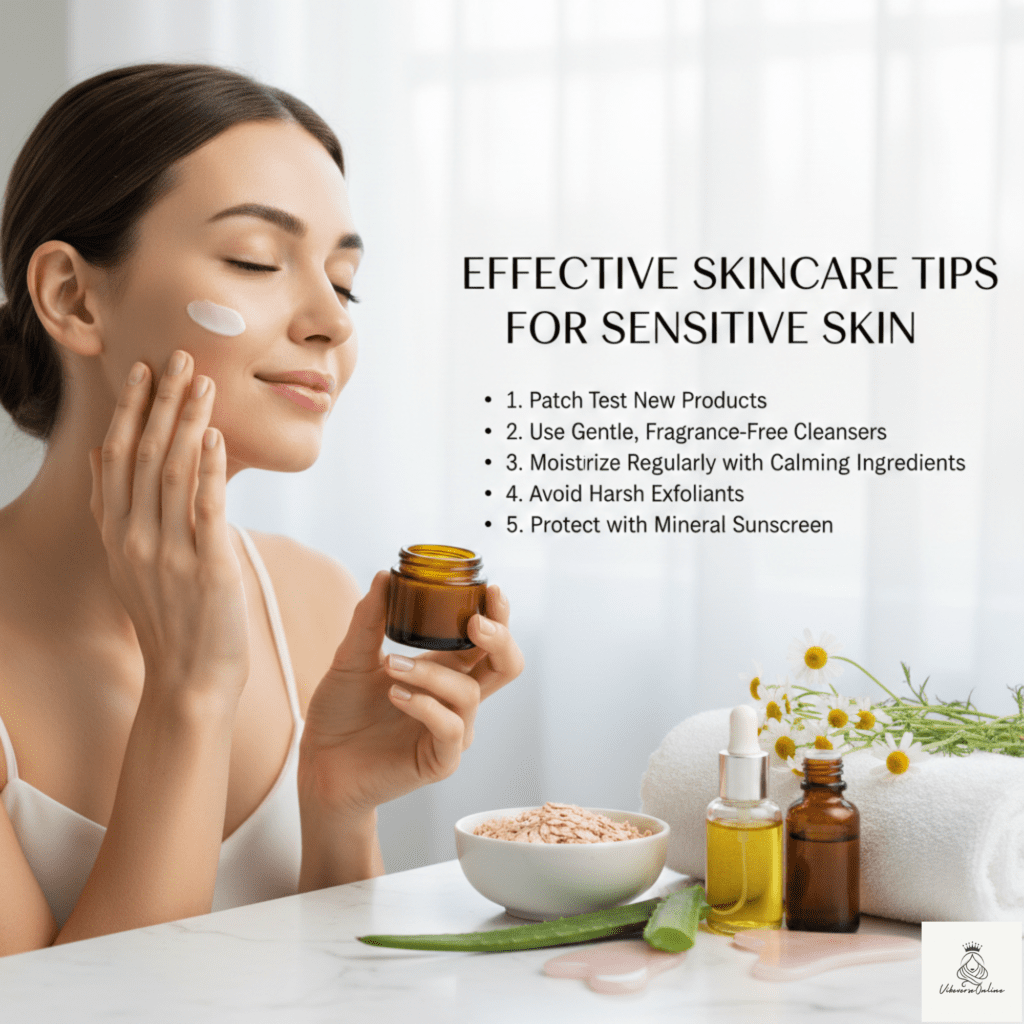
Sensitive skin needs extra care because it reacts easily to harsh products, environmental changes, and stress. If you often experience redness, itching, burning, dryness, or breakouts, your skin may be sensitive. Following the right Skincare Tips for Sensitive Skin can help protect your skin barrier, reduce irritation, and keep your skin calm and healthy.
This guide shares practical, dermatologist-approved Skincare Tips for Sensitive Skin that are simple, effective, and safe for daily use.
What Is Sensitive Skin?
Sensitive skin reacts more strongly than normal skin to:
- Fragrances
- Harsh chemicals
- Sun exposure
- Pollution
- Weather changes
- Stress
Common Signs of Sensitive Skin
- Redness
- Burning or stinging
- Dryness or flaking
- Frequent irritation
- Acne or rashes
A gentle skincare approach is essential for keeping sensitive skin healthy.
Why Sensitive Skin Needs Special Care
Sensitive skin requires extra attention because it usually has a weaker protective barrier compared to other skin types. The skin barrier acts as a shield that protects the skin from environmental pollutants, bacteria, and moisture loss. When this barrier is compromised, the skin becomes more vulnerable to irritation and damage.

Without proper care, several common problems may occur:
Skin becomes irritated easily
Sensitive skin reacts quickly to harsh ingredients, pollution, weather changes, and even certain skincare products. This can lead to itching, burning sensations, or discomfort.
Moisture escapes faster
A weak skin barrier struggles to retain hydration. As a result, the skin can become dry, tight, and flaky because moisture evaporates more easily.
Breakouts and redness increase
Sensitive skin is often prone to inflammation. Exposure to irritating ingredients or environmental stressors can cause redness, rashes, or acne-like breakouts.
Skin feels uncomfortable
People with sensitive skin frequently experience tightness, stinging, or a constant feeling of discomfort, especially after cleansing or applying new products.
The Importance of a Gentle Skincare Routine
Following the right Skincare Tips for Sensitive Skin can significantly improve skin health. Using gentle cleansers, fragrance-free products, and soothing ingredients helps strengthen the skin barrier over time. Consistent care not only reduces irritation but also keeps the skin calm, hydrated, and balanced.
With the right routine and products, sensitive skin can become stronger, healthier, and less reactive over time.me.
Daily Skincare Tips for Sensitive Skin
1. Use a Gentle Cleanser
Choose a mild, fragrance-free cleanser that does not strip natural oils.
Best options:
- Cream cleanser
- Gel cleanser (soap-free)
Avoid harsh foaming cleansers.
2. Wash Your Face with Lukewarm Water
Hot water can irritate sensitive skin. Always use lukewarm water to avoid dryness and redness.
3. Avoid Fragrance and Alcohol
Products with fragrance or alcohol can trigger irritation. Always check labels and choose:
- Fragrance-free
- Alcohol-free
- Hypoallergenic products
4. Moisturize Daily
Moisturizing helps protect the skin barrier and prevent dryness.
Look for ingredients like:
- Ceramides
- Hyaluronic acid
- Glycerin
- Aloe vera
5. Apply Sunscreen Every Day
Sensitive skin is vulnerable to sun damage. Use SPF 30+ mineral sunscreen with zinc oxide or titanium dioxide.
6. Patch Test New Products
Before applying a new product to your face:
- Test it on your wrist or behind your ear
- Wait 24 hours
- Check for irritation
7. Keep Your Skincare Routine Simple
Avoid layering too many products. A simple routine works best:
- Cleanser
- Moisturizer
- Sunscreen
8. Avoid Over-Exfoliating
Exfoliating too often can damage sensitive skin.
Safe recommendation:
Exfoliate once a week using mild exfoliants like lactic acid or enzyme exfoliators.
9. Choose Soothing Ingredients
Sensitive skin benefits from calming ingredients:
- Chamomile
- Oat extract
- Green tea
- Centella asiatica
- Niacinamide (low concentration)
10. Avoid Harsh Scrubs and Brushes
Physical scrubs can cause micro-tears and irritation. Use gentle chemical exfoliation instead.
Night Skincare Tips for Sensitive Skin
11. Remove Makeup Gently
Use micellar water or a gentle cleansing balm. Avoid rubbing your skin aggressively.
12. Use a Calming Night Cream
Night creams should focus on hydration and repair.
Ideal ingredients:
- Ceramides
- Panthenol
- Squalane
13. Avoid Strong Active Ingredients
Avoid or limit:
- Retinol (unless dermatologist-approved)
- High-strength acids
- Benzoyl peroxide
These can irritate sensitive skin.
Lifestyle Tips to Support Sensitive Skin Care
14. Maintain a Healthy Diet
Eat foods rich in:
- Omega-3 fatty acids
- Fruits and vegetables
- Water
Avoid excessive spicy or processed foods.
15. Reduce Stress and Get Enough Sleep
Stress can trigger skin sensitivity. Practice relaxation and get 7–9 hours of sleep daily.
Common Mistakes to Avoid for Sensitive Skin
❌ Using scented skincare products
❌ Switching products too often
❌ Scrubbing skin harshly
❌ Skipping sunscreen
❌ Over-washing your face
Avoiding these mistakes helps protect sensitive skin.
Best Ingredients for Sensitive Skin
Sensitive skin requires extra care and gentle ingredients that help calm irritation, strengthen the skin barrier, and maintain hydration. When choosing skincare products—especially cleansers and moisturizers—look for ingredients known for their soothing and protective properties.

Here are some of the best ingredients for sensitive skin:
1. Ceramides
Ceramides are natural lipids (fats) found in the skin barrier. They help retain moisture and protect the skin from environmental damage. Products containing ceramides help repair and strengthen the skin barrier, which is especially important for sensitive skin.
2. Hyaluronic Acid
Hyaluronic acid is a powerful hydrating ingredient that attracts and retains moisture in the skin. It keeps the skin soft, smooth, and plump without causing irritation, making it ideal for sensitive and dry skin types.
3. Aloe Vera
Aloe vera is well known for its soothing and calming properties. It helps reduce redness, inflammation, and irritation while providing light hydration to the skin.
4. Oat Extract
Oat extract (often called colloidal oatmeal) is highly beneficial for sensitive skin. It helps relieve itching, calm inflammation, and strengthen the skin’s natural protective barrier.
5. Niacinamide (Low Percentage)
Niacinamide, also known as vitamin B3, helps reduce redness, improve skin barrier function, and regulate oil production. For sensitive skin, products with a low concentration (around 2–5%) are usually best to avoid irritation.
6. Green Tea
Green tea contains powerful antioxidants that protect the skin from environmental damage. It also has anti-inflammatory properties that can soothe irritation and calm sensitive skin.
7. Zinc Oxide
Zinc oxide is commonly used in skincare for its protective and calming effects. It helps reduce redness, irritation, and inflammation, making it especially helpful for sensitive or acne-prone skin.
FAQs
1. How often should sensitive skin be washed?
Twice daily — morning and night.
2. Can sensitive skin use makeup?
Yes, but choose hypoallergenic and fragrance-free makeup.
3. Does sensitive skin need sunscreen?
Yes, sunscreen prevents irritation and sun damage.
4. How long does it take to improve sensitive skin?
Results usually appear in 3–6 weeks with consistent care.
5. Should sensitive skin use natural products?
Not always — some natural ingredients can still cause irritation.
Conclusion
Following the right Skincare Tips for Sensitive Skin helps reduce redness, irritation, and dryness while strengthening your skin barrier. Keep your routine gentle, minimal, fragrance-free, and consistent. With proper care, sensitive skin can become healthier, calmer, and more radiant over time.