
By following the right skincare tips for acne-prone skin, you can manage oil production, reduce inflammation, prevent breakouts, and maintain a healthy, glowing complexion. Acne-prone skin needs special attention because it is more likely to develop pimples, clogged pores, blackheads, whiteheads, and acne scars. Without proper care, breakouts can become frequent and difficult to control.
This guide explains step-by-step skincare tips for acne-prone skin, including routines, product recommendations, mistakes to avoid, and lifestyle habits for clearer skin.
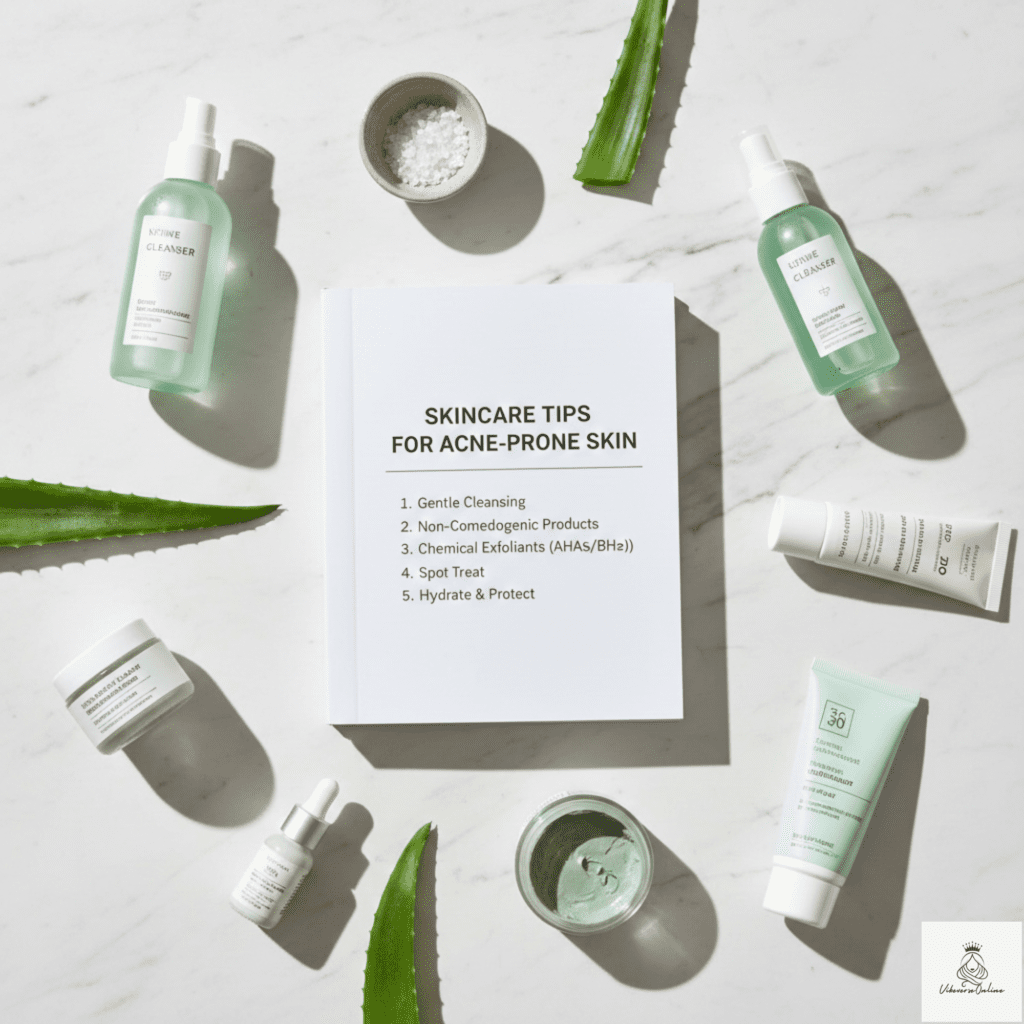
What is Acne-Prone Skin?
Acne-prone skin is skin that easily develops pimples due to:
- Excess oil (sebum)
- Clogged pores
- Bacteria buildup
- Hormonal changes
- Stress and diet triggers
- Using heavy or comedogenic products
Common acne problems include:
- Whiteheads
- Blackheads
- Papules
- Pustules
- Nodules
- Acne scars
Proper skincare tips for acne-prone skin help control breakouts and reduce long-term skin damage.
Daily Skincare Routine for Acne-Prone Skin
1. Cleanse Your Face Twice Daily
Cleansing removes dirt, oil, sweat, and bacteria that cause acne.
✔ Use a gentle foaming or gel cleanser
✔ Choose cleansers with salicylic acid or tea tree oil
✔ Wash your face morning and night
❌ Avoid harsh soaps or scrubs
Tip: Over-cleansing can irritate skin and worsen breakouts.
2. Use an Alcohol-Free Toner
Toner helps balance oil and tighten pores.
✔ Look for toners with witch hazel, niacinamide, or green tea
✔ Use toner after cleansing
❌ Avoid toners with alcohol that dry the skin
3. Apply Acne Treatment Products
Use targeted acne treatment products carefully.
Effective ingredients for acne-prone skin:
- Salicylic Acid — unclogs pores
- Benzoyl Peroxide — kills acne bacteria
- Niacinamide — reduces redness and oil
- Azelaic Acid — fades acne scars
- Retinoids — improve skin texture
✔ Apply spot treatment on pimples
❌ Avoid using multiple strong treatments at once
4. Moisturize — Even If Your Skin Is Oily
Many people skip moisturizer, but hydration is essential.
✔ Choose oil-free, gel-based moisturizers
✔ Look for non-comedogenic products
✔ Helps balance oil production
❌ Avoid heavy creams and greasy lotions
5. Never Skip Sunscreen
Sun exposure darkens acne scars and slows healing.
✔ Use SPF 30+ oil-free sunscreen
✔ Choose gel or matte sunscreen
✔ Apply daily, even indoors
❌ Avoid thick or greasy sunscreens
6. Exfoliate Gently (1–2 Times Per Week)
Exfoliation removes dead skin and prevents clogged pores.
✔ Use chemical exfoliants like AHA/BHA
✔ Exfoliate only once or twice weekly
❌ Avoid rough scrubs that damage skin
7. Choose Non-Comedogenic Makeup
Makeup can clog pores if not chosen wisely.
✔ Use oil-free foundation
✔ Remove makeup before bed
✔ Clean makeup brushes weekly
❌ Avoid sleeping with makeup on
8. Avoid Touching or Picking Pimples
Touching spreads bacteria and worsens acne.
❌ Do not pop pimples
❌ Avoid touching your face
✔ Keep hands and nails clean
9. Keep Your Environment Clean
✔ Change pillowcases every 3–4 days
✔ Clean phone screens regularly
✔ Use clean towels on your face
✔ Wash hats and scarves frequently
10. Maintain a Healthy Diet for Clear Skin
Diet impacts acne.
Recommended foods:
✔ Fruits and vegetables
✔ Omega-3 rich foods (fish, walnuts)
✔ Whole grains
✔ Water (8+ glasses daily)
Foods to limit:
❌ Sugary foods
❌ Junk and fried foods
❌ Excess dairy
❌ Processed snacks
11. Reduce Stress and Improve Sleep
Stress increases acne flare-ups.
✔ Get 7–9 hours of sleep
✔ Practice relaxation (yoga, meditation)
✔ Avoid touching skin during stress
12. Follow a Simple Weekly Routine
Morning Routine
- Cleanser
- Toner
- Lightweight moisturizer
- Sunscreen
Night Routine
- Cleanser
- Toner
- Acne treatment
- Moisturizer
13. Common Skincare Mistakes Acne-Prone People Must Avoid
❌ Overwashing the face
❌ Using harsh scrubs
❌ Skipping moisturizer
❌ Using too many products at once
❌ Popping pimples
❌ Sleeping with makeup
❌ Using oily skincare products
14. Natural Remedies for Acne-Prone Skin
✔ Aloe vera gel — soothes inflammation
✔ Tea tree oil — antibacterial
✔ Honey — reduces bacteria
✔ Green tea — controls oil
Note: Always patch-test before applying natural remedies.
15. When to See a Dermatologist
Visit a dermatologist if:
- Acne is severe or painful
- Acne leaves scars
- Over-the-counter products do not work
- Breakouts persist for months
FAQs
1. How often should I wash acne-prone skin?
Twice daily is ideal — morning and night.
2. Can oily skin still need moisturizer?
Yes, oil-free moisturizers help balance oil levels.
3. How long does acne treatment take to work?
Visible improvement usually takes 4–8 weeks.
4. Does sunscreen help acne scars?
Yes, sunscreen prevents darkening of acne marks.
5. Can diet reduce acne?
Yes, reducing sugar and oily foods can help.
Conclusion
Following proper skincare tips for acne-prone skin can significantly reduce breakouts, prevent scars, and improve overall skin health. Consistency, gentle products, good hygiene, and healthy lifestyle habits are the keys to clear skin. Be patient, as acne takes time to heal — but with the right routine, glowing and healthy skin is achievable.
DoFollow
Acne Skin Care Guide → https://www.healthline.com/health/acne