
Discover how diet affects your skin health, including the best foods for glowing skin, acne prevention, hydration, and anti-aging benefits.
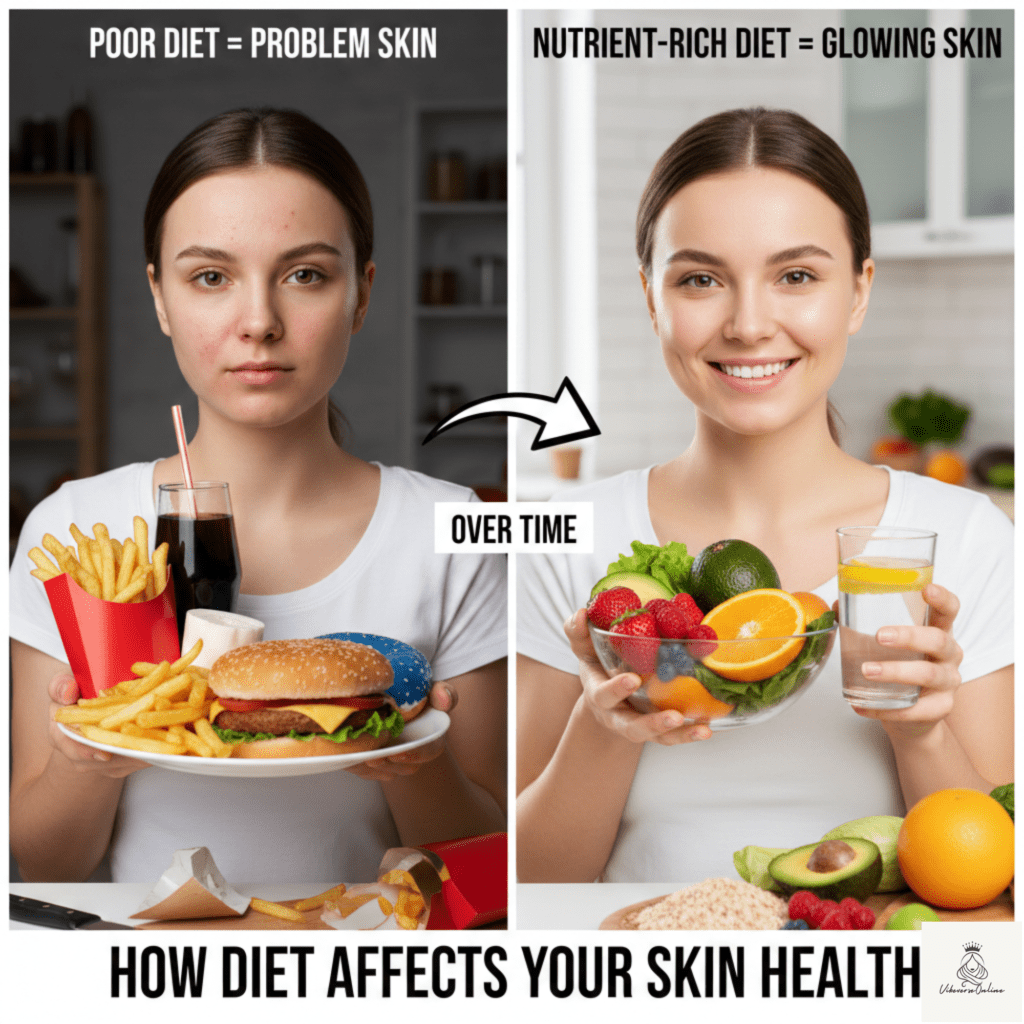
How Diet Affects Your Skin Health – Complete Nutrition Guide
How diet affects your skin health is a question many people ask when dealing with acne, dullness, dryness, or premature aging. Your skin reflects what you eat — meaning a healthy diet can promote clear, glowing skin, while poor eating habits can lead to breakouts, inflammation, and early wrinkles.
By choosing the right foods and avoiding harmful ones, you can significantly improve your skin’s appearance from the inside out.
Why Diet Matters for Healthy Skin
Your skin needs essential nutrients to:
- Produce collagen
- Repair damaged cells
- Maintain hydration
- Fight inflammation
- Protect against aging
A balanced diet fuels your body with vitamins, minerals, antioxidants, and healthy fats that support strong and radiant skin.
How Diet Affects Your Skin Health Positively
1. Hydration Improves Skin Glow
Drinking enough water helps maintain elasticity and prevents dryness.
Tip: Aim for 8–10 glasses daily.
2. Vitamin C Boosts Collagen Production
Vitamin C helps brighten skin and reduce fine lines.
Best sources:
- Oranges
- Strawberries
- Bell peppers
3. Omega-3 Fatty Acids Reduce Inflammation
Omega-3 supports skin barrier function and prevents redness.
Found in:
- Salmon
- Walnuts
- Chia seeds
4. Vitamin A Supports Skin Repair
Vitamin A promotes cell renewal and acne prevention.
Found in:
- Carrots
- Sweet potatoes
- Spinach
5. Zinc Helps Control Acne
Zinc regulates oil production and speeds wound healing.
Sources:
- Pumpkin seeds
- Eggs
- Chickpeas
6. Antioxidants Fight Skin Aging
Antioxidants protect skin from pollution and sun damage.
Rich foods:
- Blueberries
- Green tea
- Dark chocolate (in moderation)
Foods That Can Harm Your Skin
While genetics and skincare routines play a major role in your skin’s health, what you eat acts as the fuel for your skin’s biological processes. Certain foods can trigger internal reactions—like inflammation and hormonal spikes—that manifest externally as breakouts, dullness, or premature aging.
1. Sugary Foods & Soda
The Impact: Acne & Premature Aging (Glycation)
- Insulin Spikes: High-sugar foods and drinks cause a rapid rise in blood sugar. This triggers the body to produce insulin, which stimulates androgen hormones and sebum (oil) production, leading to clogged pores and acne.
- Glycation: Excess sugar molecules can attach to proteins in the skin like collagen and elastin. This process creates Advanced Glycation End products (AGEs), which make these fibers stiff and brittle, leading to wrinkles and a loss of elasticity.
- Hidden Culprits: Soda, energy drinks, candy, and “white” carbohydrates (white bread, pastries) which the body processes as sugar.
2. Fried and Oily Foods
The Impact: Inflammation & Surface Oil
- Systemic Inflammation: Fried foods are often cooked in highly processed vegetable oils (like corn or soy oil) rich in Omega-6 fatty acids. An imbalance of too many Omega-6s can promote systemic inflammation, making inflammatory skin conditions like acne or rosacea more severe.
- Oxidative Stress: Oils heated to high temperatures can create free radicals that damage skin cells and accelerate the aging process.
- Note: Eating grease doesn’t “leak” out of your pores, but the internal inflammatory response can lead to a more oily, reactive complexion.
3. Excess Dairy
The Impact: Hormonal Breakouts
- IGF-1 Hormones: Cow’s milk contains growth hormones (like Insulin-like Growth Factor 1) designed to help calves grow. In humans, these hormones can stimulate the sebaceous glands, making skin oilier.
- Skim Milk Paradox: Interestingly, several studies have linked skim milk more closely to acne than whole milk. This is thought to be because skim milk has a higher glycemic index or because the processing removes healthy fats that might otherwise balance the hormonal response.
- Alternatives: If you notice flare-ups after eating dairy, try switching to unsweetened almond, oat, or soy milk.
4. Highly Processed Junk Food
The Impact: Nutrient Depletion & Dullness
- “Empty” Calories: Processed snacks (chips, frozen dinners, instant noodles) are often high in sodium and low in skin-loving nutrients like Vitamin C, Zinc, and Vitamin E. Without these, the skin struggles to repair itself, leading to a sallow or “dull” appearance.
- Sodium & Puffiness: High salt intake causes the body to retain water, which can lead to facial puffiness and under-eye bags, especially the morning after a salty meal.
5. Excess Caffeine & Alcohol
The Impact: Dehydration & Redness
Sleep Disruption: Both substances can interfere with your “beauty sleep,” the critical window when your skin undergoes cellular repair and turnover.
Dehydration: Both alcohol and caffeine are diuretics, meaning they draw water out of the body. Dehydrated skin loses its plumpness, making fine lines and pores appear much more prominent.
Alcohol & Flushing: Alcohol dilates blood vessels (vasodilation), which can lead to temporary flushing or “the glow.” However, over time, this can lead to permanent redness or broken capillaries, particularly for those with rosacea.
Best Foods for Glowing Skin
| Food | Skin Benefit |
|---|---|
| Avocado | Hydration & elasticity |
| Salmon | Reduces inflammation |
| Nuts & seeds | Healthy fats |
| Leafy greens | Detox support |
| Yogurt | Gut & skin health |
How Gut Health Affects Skin
A healthy gut leads to healthier skin. Poor digestion can cause:
- Acne
- Rashes
- Redness
- Sensitivity
Eat more:
- Probiotic yogurt
- Fermented foods
- Fiber-rich fruits & vegetables
Daily Diet Plan for Healthy Skin (Sample)
Breakfast: Oatmeal + berries
Lunch: Grilled chicken + salad
Snack: Nuts + green tea
Dinner: Fish + vegetables
Lifestyle Tips to Support Skin Health
- Get 7–9 hours of sleep
- Reduce stress
- Exercise regularly
- Avoid smoking
- Wear sunscreen daily
Common Mistakes to Avoid
❌ Expecting instant results
❌ Relying only on skincare products
❌ Overeating junk food
❌ Ignoring hydration
FAQ
Q1: Can diet really improve skin health?
Yes — consistent healthy eating improves skin over time.
Q2: How long before diet changes show results?
Usually 4–8 weeks.
Q3: Does sugar cause acne?
High sugar intake may worsen breakouts.
Q4: Are supplements necessary?
Whole foods are best; supplements help if you’re deficient.
Conclusion + CTA
Understanding how diet affects your skin health helps you make smarter food choices that support clearer, healthier, and younger-looking skin. Beauty truly starts from within — and the right nutrition makes a visible difference.
👉 Want a personalized skin-friendly meal plan based on your skin type or goals? Tell me, and I’ll create one for you.
Internal Links (Placeholders)
- Best Skincare Routine for Glowing Skin →
[YOUR LINK] - How to Reduce Dark Spots Naturally →
[YOUR LINK] - Best Vitamins for Skin Health →
[YOUR LINK]
External DoFollow Link
https://www.aad.org (American Academy of Dermatology)