
Learn the importance of sunscreen in daily skincare to protect your skin from sun damage, premature aging, dark spots, and harmful UV rays.
Introduction
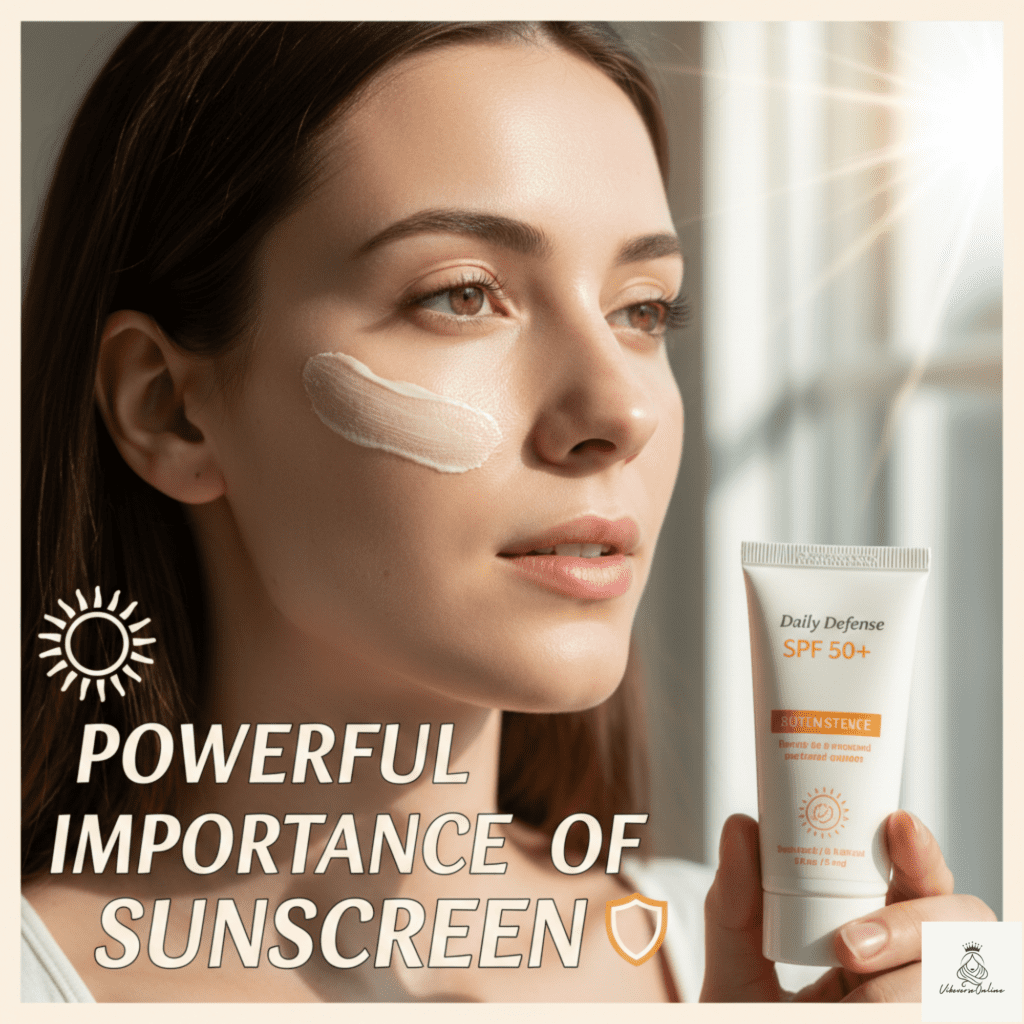
Understanding the importance of sunscreen in daily skincare is essential for maintaining healthy, youthful, and glowing skin. Sunscreen is not just for sunny days or beach trips — it is a daily skincare essential that protects your skin from harmful ultraviolet (UV) rays that cause aging, pigmentation, sunburn, and even skin cancer.
If you want long-term skin health, sunscreen should be a non-negotiable step in your skincare routine.
Why Sunscreen Is Essential in Daily Skincare
Sun exposure occurs every single day, even when you are indoors or when the weather is cloudy. Harmful ultraviolet (UV) rays can pass through clouds and even penetrate windows, reaching your skin without you realizing it. Over time, these rays can damage skin cells, weaken the skin barrier, and accelerate visible signs of aging.
Using sunscreen as part of your daily skincare routine provides several important benefits:
Prevents premature aging
UV exposure is one of the main causes of early wrinkles, fine lines, and loss of skin elasticity. Regular sunscreen use helps keep the skin looking youthful and smooth.
Protects against sunburn
Sunburn occurs when UV rays damage the skin’s outer layers. Sunscreen acts as a protective shield that helps reduce this damage.
Reduces hyperpigmentation
Sun exposure can trigger dark spots, uneven skin tone, and pigmentation issues. Daily sunscreen helps prevent these problems from developing or worsening.
Lowers the risk of skin cancer
One of the most important benefits of sunscreen is protection against long-term UV damage, which is linked to various forms of skin cancer.
Maintains an even skin tone
Consistent sunscreen use helps keep the skin tone balanced by preventing sun-induced discoloration and redness.
The Importance of Daily Sunscreen
The importance of sunscreen in daily skincare goes far beyond cosmetic benefits. It plays a critical role in protecting skin health, preventing long-term damage, and preserving the skin’s natural appearance.
For best results, dermatologists recommend using broad-spectrum sunscreen with SPF 30 or higher every day, even when staying indoors or during cloudy weather. Consistent protection is one of the simplest yet most effective ways to maintain healthy, youthful skin.
How UV Rays Damage the Skin
Ultraviolet (UV) radiation from the sun is one of the biggest factors that affects skin health. Even short periods of sun exposure can cause damage to skin cells over time. There are two main types of harmful UV rays that affect the skin in different ways.
1. UVA Rays
UVA rays penetrate deeply into the skin and are mainly responsible for long-term skin damage.
They can:
- Cause wrinkles and fine lines by breaking down collagen and elastin in the skin
- Lead to premature aging, often called “photoaging”
- Penetrate deep into the skin layers, damaging cells even when sunburn is not visible
UVA rays are present all year round and can even pass through windows, which means your skin is exposed even while indoors.
2. UVB Rays
UVB rays mainly affect the outer layers of the skin and are the primary cause of visible sun damage.
They can:
- Cause sunburn and redness
- Damage the surface layers of the skin
- Increase the risk of skin cancer with repeated exposure
UVB rays are usually stronger during midday and summer months, but they can still damage skin on cloudy days.
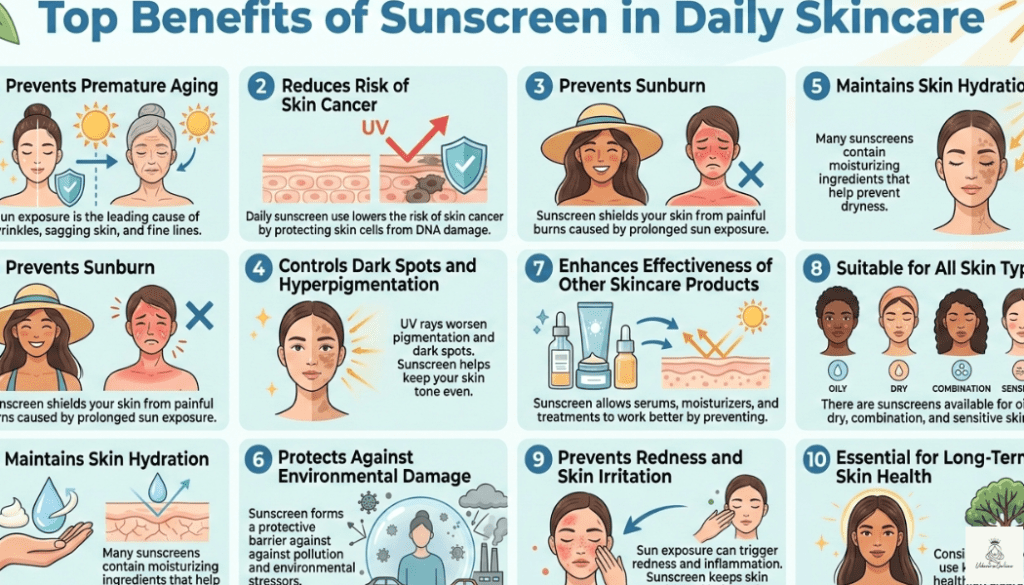
Top Benefits of Sunscreen in Daily Skincare
1. Prevents Premature Aging
Sun exposure is the leading cause of wrinkles, sagging skin, and fine lines. Sunscreen helps maintain youthful skin.
2. Reduces Risk of Skin Cancer
Daily sunscreen use lowers the risk of skin cancer by protecting skin cells from DNA damage.
3. Prevents Sunburn
Sunscreen shields your skin from painful burns caused by prolonged sun exposure.
4. Controls Dark Spots and Hyperpigmentation
UV rays worsen pigmentation and dark spots. Sunscreen helps keep your skin tone even.
5. Maintains Skin Hydration
Many sunscreens contain moisturizing ingredients that help prevent dryness.
6. Protects Against Environmental Damage
Sunscreen forms a protective barrier against pollution and environmental stressors.
7. Enhances the Effectiveness of Other Skincare Products
Sunscreen allows serums, moisturizers, and treatments to work better by preventing sun damage.
8. Suitable for All Skin Types
There are sunscreens available for oily, dry, combination, and sensitive skin.
9. Prevents Redness and Skin Irritation
Sun exposure can trigger redness and inflammation. Sunscreen keeps skin calm and balanced.
10. Essential for Long-Term Skin Health
Consistent sunscreen use keeps your skin healthier, clearer, and stronger over time.
How to Choose the Right Sunscreen for Your Skin Type
For Oily Skin
- Gel-based or oil-free sunscreen
- Non-comedogenic formulas
For Dry Skin
- Cream-based sunscreen
- Hydrating ingredients like glycerin or ceramides
For Sensitive Skin
- Mineral sunscreen
- Fragrance-free and hypoallergenic
For Combination Skin
- Lightweight lotion sunscreen
How to Apply Sunscreen Correctly
Applying sunscreen properly is just as important as choosing the right one. Many people use sunscreen but apply too little or forget certain areas, which reduces its effectiveness. Following the correct steps ensures your skin receives maximum protection from harmful UV rays.
1. Use SPF 30 or Higher
Choose a broad-spectrum sunscreen with SPF 30 or higher. This level of protection helps block a significant amount of both UVA and UVB rays, reducing the risk of sun damage.
2. Apply 15–20 Minutes Before Sun Exposure
Sunscreen needs time to absorb into the skin and form a protective barrier. Apply it 15–20 minutes before going outside so it can work effectively.
3. Use the Two-Finger Rule
For the face and neck, apply two finger-length strips of sunscreen (one on each finger). This ensures you are using enough product to achieve the SPF protection listed on the label.
4. Reapply Every 2–3 Hours
Sunscreen wears off due to sweat, water, and natural skin oils. Reapply every 2–3 hours, especially if you are outdoors for long periods.
5. Don’t Forget Commonly Missed Areas
Many people forget important areas that are still exposed to the sun. Make sure to apply sunscreen on:
Back of the neck.
Ears
Neck
Hands
Hairline
Common Sunscreen Mistakes to Avoid
❌ Skipping sunscreen on cloudy days
❌ Using too little product
❌ Not reapplying sunscreen
❌ Forgetting indoor sun exposure
❌ Using expired sunscreen
Avoiding these mistakes ensures maximum protection.
Sunscreen vs Moisturizer with SPF
While moisturizers with SPF offer some protection, dedicated sunscreen provides stronger and more reliable coverage. For best results, use sunscreen as a final step in your morning skincare routine.
Who Should Use Sunscreen Daily?
Everyone should use sunscreen, including:

- Men and women
- Teenagers
- Children
- People with sensitive skin
- Indoor workers
- Outdoor workers
The importance of sunscreen in daily skincare applies to all ages and skin tones.
FAQs
1. Do I need sunscreen indoors?
Yes, UVA rays can penetrate windows and affect skin.
2. Can sunscreen prevent wrinkles?
Yes, it helps reduce signs of aging caused by sun exposure.
3. Is SPF 50 better than SPF 30?
SPF 50 offers slightly more protection, but SPF 30 is sufficient for daily use.
4. Should sunscreen be used in winter?
Yes, UV rays are present year-round.
5. Can sunscreen clog pores?
Oil-free and non-comedogenic sunscreens prevent clogged pores.
Conclusion
The importance of sunscreen in daily skincare cannot be overstated. Sunscreen protects your skin from harmful UV rays, prevents premature aging, reduces pigmentation, and supports long-term skin health. Whether you stay indoors or go outside, daily sunscreen use is essential for maintaining youthful, healthy, and glowing skin.
Make sunscreen a daily habit — your future skin will thank you.